This post is a contribution to an online symposium on the changing nature of knowledge production in fragile states. Be sure to read other entries by Deval Desai and Rebecca Tapscott and Lisa Denney and Pilar Domingo. My nomination for development’s ‘Most Insightful, Least Cited’ paper is Ariel Heryanto’s “The development of ‘development.'”[1] Originally written in Indonesian in the mid-1980s, Heryanto’s gem been cited a mere 79 times (according to Google Scholar), even in its carefully-translated English incarnation. For me, this paper is so wonderful because it makes, in Continue reading →
This post is a contribution to an online symposium on the changing nature of knowledge production in fragile states. Be sure to read other entries, beginning with Deval Desai and Rebecca Tapscott‘s piece. While researchers (ourselves included) now consistently underline the importance of understanding the political economy of developing countries and donors that support them in order to achieve better aid outcomes, the research industry remains largely ambivalent about questions of our own political economy. Desai and Tapscott’s paper is therefore a refreshing attempt to start Continue reading →
Aid in the 21st century is increasingly evidence-driven. Between 2000 and 2006, the World Bank spent a total of $630 million on research. By 2011 the World Bank was spending $606 million per year, or about a quarter of its country budgets. In September of this year, by signing up to the Sustainable Development Goals, the global community enshrined a commitment to “increase significantly” a range of high-quality data over the next 15 years, to facilitate qualitative as well as quantitative understandings of growth and Continue reading →
Over the next week, Humanity will be hosting an online symposium on the changing nature of knowledge production in fragile states. In light of the intensification of evidence-based policymaking and the “data revolution” in development, the symposium asks what the ethical and political implications are for qualitative research as a tool of governance. The symposium will begin tomorrow with a short paper from Deval Desai and Rebecca Tapscott, followed by responses during the week from Lisa Denney and Pilar Domingo (ODI); Michael Woolcock (World Bank); Morten Jerven (Norwegian University of Life Sciences and Simon Fraser University); Alex de Continue reading →
The Human Rights Working Paper Series (WPS) is dedicated to interdisciplinary and critical dialogue on international human rights law and discourse. It publishes innovative papers of the highest quality by established and early-career researchers and practitioners, from the University of Texas and other institutions around the world. The WPS provides authors with an opportunity to receive feedback on works in progress. It also seeks to provide a lively, productive environment for debate about human rights among academics, policymakers, practitioners, and the wider public. To Continue reading →
International Research Academy on the History of Global Humanitarianism Academy Leaders: Fabian Klose (Leibniz Institute of European History Mainz) Johannes Paulmann (Leibniz Institute of European History Mainz) Andrew Thompson (University of Exeter) in co-operation with the International Committee of the Red Cross (Geneva) and with support by the German Historical Institute London Venues: University of Exeter, UK & Archives of the International Committee of the Red Cross, Geneva Dates: July 10-22, 2016 Deadline: December 31, 2015 Information at: http://hhr.hypotheses.org/ and http://imperialglobalexeter.com/ The international GLOBAL HUMANITARIANISM | RESEARCH Continue reading →
The European Agenda on Migration, published May 13 and implemented throughout the past summer, is a fascinating initiative. The policy has four stated “pillars”: (1) reducing incentives for unauthorized or “irregular” migration; (2) border management — which is understood as both border enforcement and saving the lives of migrants at risk; (3) a “strong common asylum policy” and (4) providing new avenues for legal migration. This agenda presents the EU’s most comprehensive attempt to address a surging number of asylum seekers and migrants now Continue reading →
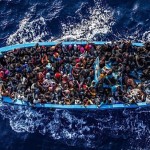
Rescues at sea are dangerous and come with great possible cost to those involved. In this brief essay, I consider why, beyond a simple explanation of the imperative to protect life, civilian sailors rescue refugees at sea, and explore how specific extreme environments and professional identities may interface at the boundaries of humanitarian imagination, thought and action Before MSF and the navies of EU states became more involved in intercepting boatloads of refugees sinking into the Mediterranean, the job of pulling them out of the Continue reading →
There is this great anecdote that Gershom Scholem tells at the end of his monumental Major Trends in Jewish Mysticism. It speaks of the Baal Shem Tov, the eighteenth-century founder of Hasidism, who, when he had “a difficult task before him . . ., would go to a certain place in the woods, light a fire and meditate in prayer — and what he had set out to perform was done.” The tale follows the slow, generational loss of the elements that ensure successful results Continue reading →
At the heart of his provocative essay, Samuel Moyn highlights the shortcomings of the human rights framework to confront socioeconomic inequality. His central argument asserts that human rights norms articulate the minimal obligations of states to protect the poor but say nothing about the excesses of wealth, therefore accommodating a neoliberal ideology that fundamentally threatens human dignity. In my view, Moyn produces a brief but inadequate description of human rights provisions for social welfare (floors), overlooks some recent attempts at placing limits on accumulation (ceilings), Continue reading →
